Elon's Next Seven Days

Posted July 30, 2026
Chris Campbell
If you bought SpaceX on opening day, you paid somewhere between $149 and $200 a share.
It's $115 this morning.
You're not alone in the hole.
Six members of Congress bought that same week, and they're underwater too. Cathie Wood has been buying more nearly every day, all the way down.
So everybody holding this stock is asking the same thing.
Do I sell.
Wrong question. Ask one you can actually answer today.
What did you buy?
Maybe you think you bought a rocket company.
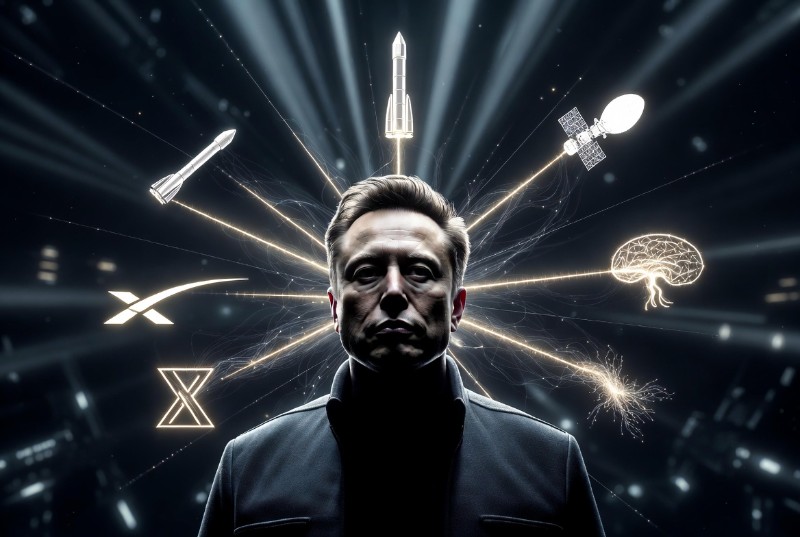
In reality, you bought a rocket company, an AI company, a satellite internet provider, and Twitter, all folded into one ticker over three years.
And every one of those pieces answers to one man.
Not the board. Not the investors. Elon.
Next week, that simple fact is going to matter. And if you own SPCX—(and even if you don’t)—there are three dates you need to watch.
First, let’s back up.
The Rules Nobody Reads
Before a company sells a single share, somebody writes down the rules. How many shares exist. What each one is worth. Who decides what, and by how much.
That document is the corporate charter, and the founder writes it.
The law says one share, one vote. Then it says you can ignore that, and hands you the pen.
Zuckerberg took the pen.
He wrote two kinds of stock into Meta's charter—the shares he sold to the public get one vote, the shares he kept get ten.
Then he sold most of his stake and pocketed the money. Today he owns about an eighth of Meta and wins every vote in the building because his eighth is worth ten times that.
Musk wrote the identical rule into SpaceX. Then he did the one thing Zuckerberg didn't.
He never sold.
He owns 42% of the company and controls 85% of the votes. No board to talk him out of anything. No shareholder who can force a question. No meeting he can lose.
He built it that way on purpose.
What He Does With It
A man who can't be outvoted doesn't negotiate.
He gets what he wants. When Musk needs something, he buys the company that makes the thing.
And that’s how he’s always worked.
He paid $109 million for a German automation shop in 2017, for the machines that build his machines. He paid $218 million for a battery company in 2019, kept the one process he wanted, and runs it in Texas today.
He bought a thirty-person satellite startup in 2021 for its engineers, and their thruster flies on Starlink now.
He also bought Twitter for $44 billion and blew a hole in his own net worth. He sold xAI to SpaceX for a quarter of a trillion dollars—the seller and the buyer, same man, same afternoon.
That's what 85% buys you. The freedom to do all of it and not beg for permission.
Now here’s why this is important.
Three Dates to Watch
Tuesday, SpaceX reports earnings for the first time as a public company. Twenty-four years private, and analysts finally get to ask their questions out loud.
Thursday, $123 billion in insider stock unlocks, and everyone who got in early decides whether to run.
Both are out of your hands. The third one isn't.
Because before either date, something else is moving, and nobody's watching it.
This Sunday at 7 p.m. Eastern, James goes live to make his case for the company he believes is Musk’s next big buyout—a name a two-hundredth the size of SpaceX, holding the one thing Musk won't rent.
He's calling it Elon's Big Buy.
The event is free to attend, but here’s the problem.
Musk doesn't announce on a schedule. He's made a career of moving before anyone's ready.
So we'd rather you not depend on an email you might catch too late. On the next page, you can also opt into text alerts, which we don't open up on every event. (Only if you want them.)
There’s only one way to join the event: