Spectrum Wars: The Final Frequency

Posted August 04, 2026
Chris Campbell
In December 2025, I wrote about a satellite company nobody wanted.
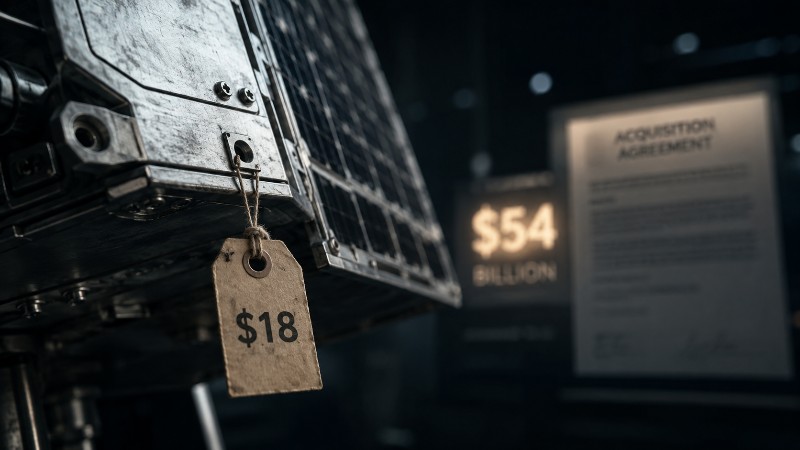
Iridium. Ticker IRDM. Trading under $18 a share.
A ~$2 billion market cap for the only truly global satellite constellation on earth—66 satellites, pole-to-pole coverage, fat Pentagon contracts, and hundreds of millions in free cash flow.
Wall Street priced it like a niche sat-phone company, but the evidence against that rating was sitting in plain sight.
Four months earlier, in August 2025, AT&T paid $23 billion for a slice of EchoStar's spectrum. Then, in September, SpaceX paid ~$17 billion for the satellite portion. In November, SpaceX came back for another $2.6 billion helping.
Suddenly, the clearing price for scarce airwaves was printed in black and white.
Wall Street saw every deal. Analysts cited them by name: in their Iridium downgrades.
Buyers were carving up the airwaves in the biggest land grab in decades—and Wall Street's move was to dump the company holding the rarest slice.
They priced the threat. They never priced the asset.
But here’s the thing:
Iridium held 8.7 MHz of globally coordinated L-band. Jam-resistant. Weather-proof. Irreplaceable. The kind of asset that takes years of international treaty filings to assemble and cannot be built at any price.
If you ran Iridium's spectrum against the deals already on the tape last year, the airwaves alone were worth more than the entire company. The satellites, the revenue, the government relationships—all of it was virtually free.
Then the dominoes kept falling.
In April, Amazon paid $11.57 billion for Globalstar—a smaller constellation with weaker spectrum. The land grab was accelerating, but the market was still slow to connect the dots.
Yes, the IRDM stock had run—but many waved it off as a "SpaceX proxy." A place to park money while the real asset stayed private.
On June 29, the dots connected on their own.
Rocket Lab announced it was buying Iridium for $8 billion. $54 a share. When Reuters asked CEO Peter Beck why, he said it plainly: "And of course, the all-important spectrum."
Readers who acted on the original write-up had the chance to roughly triple their money.
Here's why I'm telling this story today.
James’ AI-powered Buyout Indicator System flashed a "blue spike" on Iridium six days before the Rocket Lab announcement.
Now the same system is flashing again.
Same signal. Same sector.
A tiny satellite outfit—1/200th of SpaceX's size—sitting on what James believes is the missing piece of Elon's AI ambitions.
But time’s almost up.
Today, after the closing bell, Elon’s scheduled to issue a public update on SpaceX. It will be his first since the company shattered IPO records in June. It's on the books. It's 100% happening.
James's prediction: Elon makes an announcement that sends this company's stock soaring.
As a True Alpha subscriber, you already have access to the full details. If you haven’t already, click here for the latest reports.