
The Best AI on Earth is Basically Free

Posted July 29, 2026
James Altucher
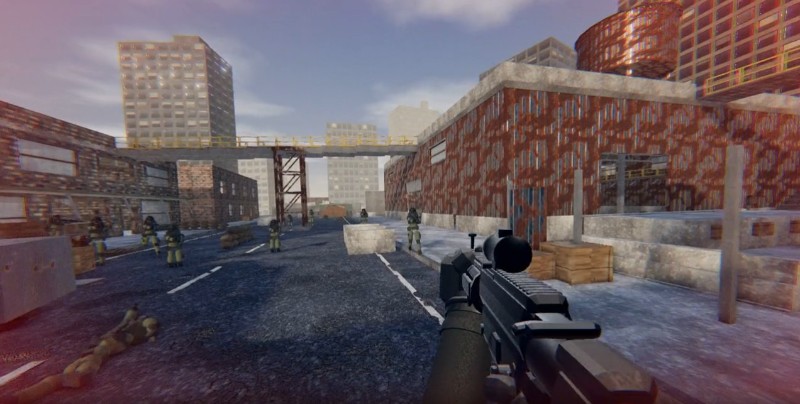
Yesterday, I showed you the first-person shooter game I made with AI.
Ten and a half hours. 1.3 million tokens. Working physics. Crisp graphics. Every art asset generated out of thin air.
Total cost: sixty dollars.
I’m bringing it up again today for two reasons.
One, because I want you to understand how remarkable this is.
Second, because it has everything to do with why I jumped on Mark Jeffrey’s podcast Hash Rate this week.
First things first.
Why This is Crazier Than Anyone Realizes
A “token” is about three quarters of a word.
So the AI thought its way through a million words to hand me a video game. That’s about the length of the complete Harry Potter series.
And it did it in about ten hours.
I couldn't read a million words in ten hours. Nobody could. Let alone program a game from scratch.
And how it did it is even more remarkable.
I lifted the method from Matt Schumer. You tell the model to screenshot the real Call of Duty, build its own version, screenshot that, compare the two, split the work across agents working in parallel, and keep going until they match.
I'm a coder by background. I remember trying to make games twenty years ago. It would’ve been impossible to make anything like this by myself, let alone in 10 hours. Even two years ago this project was a team of programmers, six months, a million dollars. I would have signed the check.
Today it costs sixty bucks.
Everyone is arguing about inflation. Here's a number nobody has in a spreadsheet: one job, a million dollars down to sixty, in twenty-four months.
I got into all of this with Mark. And it went somewhere uncomfortable for many software stocks.
So What's Left?
If I can clone a billion-dollar franchise in a day for the price of a decent dinner, then the code protects nothing.
If the software doesn't protect a company anymore, something has to.
Three things survive.
Data. An AI is only as smart as what it's been shown. And there's information it will never see. A bank's fraud records. A hospital's scans. A police department's body cam footage. Nobody is emailing that to an AI lab. Whoever holds the most useful data holds something all the cheap intelligence in the world can't copy.
Distribution. Being where the customer already is. I can build a better product this afternoon and never reach a single person using the incumbent. Ask anyone who built a better search engine.
Trust. The one everybody underrates. I could write my own tax software. I use H&R Block anyway. Mine would probably be better. But when the audit letter arrives, I want somebody else's name on the box. Nobody ever got fired for buying IBM.
Here's what all three look like in one company.
There's an AI project called Score that teaches machines to tell a forest fire from a guy with a flashlight on a camera feed.
Boring. Enormously valuable.
It works the way I just described—train on the specialized footage a general-purpose model will never be shown. And it reaches customers through PricewaterhouseCoopers, so it arrives wearing a suit clients already trust.
Score isn't a startup in Palo Alto.
It's a subnet on a crypto network called Bittensor.
The Trade
Bitcoin talked strangers all over the world into plugging in computers and burning electricity, and paid them in Bitcoin for the trouble.
Though it’s down from all-time highs, few people can argue it hasn’t been a massive success.
Bittensor pointed the same trick at AI. Run the machines through subnets (which are small AI companies on Bittensor), do useful AI work, get paid in a token called TAO. Best work earns the most.
Meanwhile, Kimi K3 released its open weights on Monday. These stories are related.
Because the moat everyone assumed the frontier labs would enjoy for years evaporated in about three seconds. State-of-the-art intelligence is rapidly becoming a commodity.
Commodities have no brand loyalty and no network effects. The cheapest producer wins. Full stop.
So who's cheapest? Bittensor.
There's another subnet on Bittensor running frontier models on consumer graphics cards instead of million-dollar racks, on the cheapest power on Earth. Cheapest anywhere. Market cap of about twenty-five million dollars.
Meanwhile OpenRouter carries a valuation around ten billion. A Bittensor subnet called Chutes supplies a great deal of what routes through OpenRouter and books roughly a million in revenue.
Bittensor, the network all of these subnets run on, has been dead money around $200 for over a year, waiting on a breakout nobody has delivered yet.
Cheap frontier intelligence might be it.
And here's what makes it interesting at its current price.
Bittensor is 128 AI companies wearing one ticker. Vision. Translation. Bank fraud detection. Several selling raw AI horsepower cheaper than anyone on Earth.
Together they're valued at roughly two billion dollars, at a moment when a single AI company can carry a trillion.
That’s the opportunity.