The Little Guy’s Unfair Advantage

Posted July 21, 2026
Chris Campbell
When people say "smart money," they mean the institutions.
The pros.
The hedge funds and pension funds, with their armies of analysts, their satellite photos of parking lots, and their standing dinner reservations with people who know things.
In short, the people who always know more than you do. (Allegedly.)
But the phrase is older than any of them. Older than Wall Street itself.
It began at the track.
Long ago, "smart money" meant the bets placed by the sharps—the gamblers with a winning record, or the ones with a tip straight from the stable.
And the best part? You didn't need to know a fetlock from a furlong. You just watched where the smart money went and shuffled in behind it.
Go back further and "smart money" meant something else entirely.
Something darker.
In the 1690s it was the money paid to sailors and soldiers who got maimed on the job—from the old sense of "smart" meaning to sting or hurt, the way a wound smarts.
By 1818, it was the money you paid to wriggle out of whatever unpleasant situation you'd gotten yourself into. In court it meant punitive damages.
Money that hurts.
So the phrase reaches us today from two meanings: The clever insider's bet. And the painful price of being stuck.
In 2026, both of them are true. At the same time. About the same money.
The Edge Smart Money Can't Buy
The smart money is still the insider's bet—the trillions sloshing around inside the funds.
But somewhere along the way it became the other kind too. The hurting kind.
The smart money got so catastrophically well-fed, it’s simply too big to buy anything too small.
A tiny company could triple, quintuple, ten-bag, throw itself a parade—and it still wouldn't budge a hundred-billion-dollar portfolio by a rounding error.
So they don't even look. They can't.
Even Warren Buffett pointed out the edge he lost as he grew.
"The highest rates of return I've ever achieved were in the 1950s,” he told Businessweek in 1999.
“I killed the Dow. You ought to see the numbers. But I was investing peanuts then. It's a huge structural advantage not to have a lot of money. I think I could make you 50% a year on $1 million. No, I know I could. I guarantee that.”
If you’re reading this, you probably have the one thing all that smart money lost and can never buy back.
You're relatively small. You can move.
You can stroll through the little doorways the giants are wedged outside of and pick up the exact things they're incapable of touching.
"If I had $10,000 to invest,” Buffett went on, “I would focus on smaller companies because there would be a greater chance that something was overlooked."
And this is exactly where James and our Paradigm colleague Chris Cimorelli have been poking around.
The tiny stocks the smart money is overlooking.
And they found one.
Why They’re Giving it Away
It’s a $10 AI company, parked in the corner of the market the smart money can't reach.
That won't last.
The day it grows big enough for the giants to notice, they'll come thundering in at once—and the bargain will be a memory.
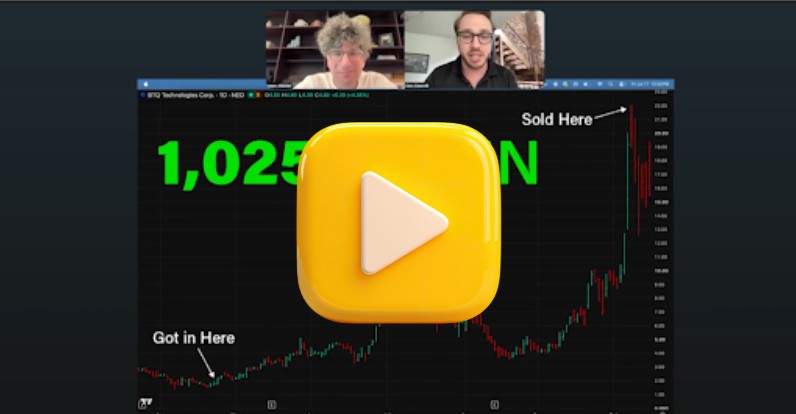
Until Thursday, James and Chris are giving it away free in a short 6-minute video.
No paywall. No credit card. No small print you need a lawyer and a magnifying glass to survive.
They recorded a short video laying the whole thing out.
Again, the ticker's free. You just have to watch it.
The smart money won’t. They’re too plump. You've got the opposite problem. And it’s the best problem in the business.
Don’t waste it.
Watch the video here or click it below. They’ll give you the name.